
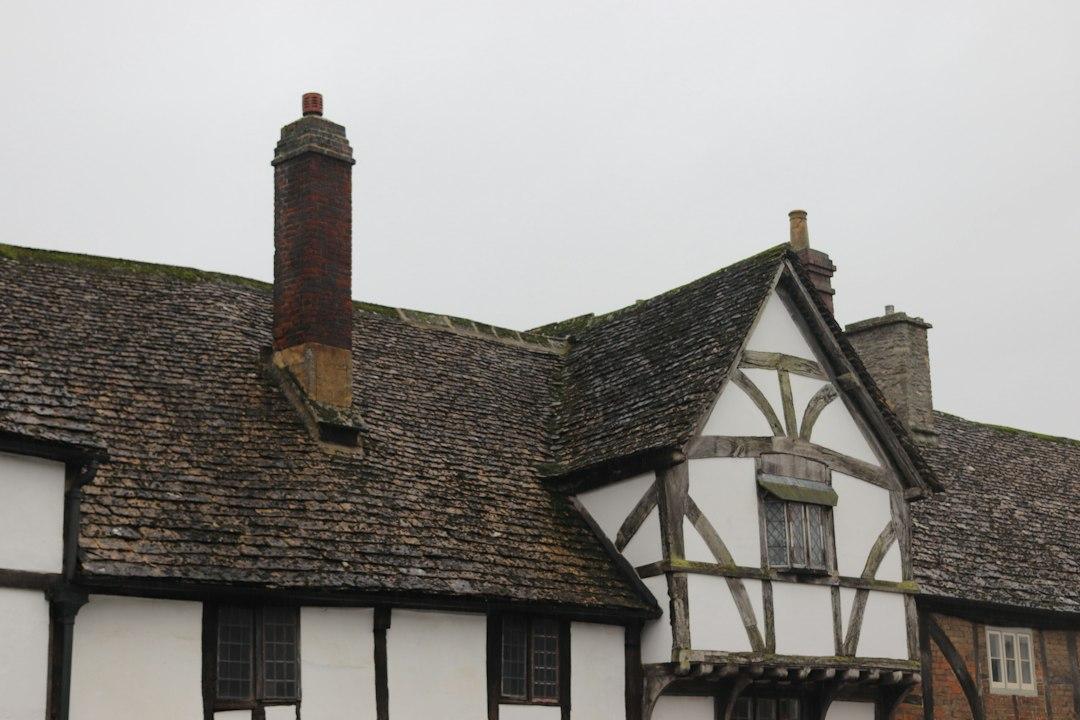
Chimney Crown Repair in Garden Grove: Coat It or Recast It
Ask About This Service
Give the address and a line on the chimney. The office comes back with a date and what the visit will take in.
What the Work Involves
Bricklayers often finished a chimney by trowelling leftover mortar over the last course. Mortar is the wrong material for that job: it shrinks, crazes and lets water into the brick below. A proper crown is cast concrete or a dedicated crown mix, thick at the flue, falling to the edge, projecting past the brick face, with a soft joint around the tile. We resurface crowns that are worn but whole and recast those that have broken up.
A Mortar Wash Is Not a Crown
Look at the top of most brick chimneys in this area and you will find the same thing: leftover bricklaying mortar, troweled into a low mound around the flue tile and feathered out to nothing at the edge of the brick. Masons call that a wash. It was quick, it used what was already on the board, and it was never going to last. Bricklaying mortar is made to sit in a joint under load, not to lie in a thin sheet under open sky. It shrinks as it cures, it has no reinforcing, and where it thins to an eighth of an inch at the edges it breaks up within years. A real crown is a different object: a concrete lid, formed and poured, a couple of inches thick even at its thinnest point, pitched to drain, and projecting past the brick on all sides, with a small saw-cut or formed groove on the underside of that projection so drops let go there and fall instead of creeping back to the wall.
The second flaw in most old washes is at the middle. The mortar was packed hard against the clay flue tile. Tile and crown heat up at different rates when a fire is lit, the tile lengthens a little, and a rigid bond between them has to give: the crown splits outward from the flue in a star of cracks. A proper crown stops short of the tile, with the gap closed by a bead of high-temperature sealant that stays soft. Once a crown is cracked, each storm feeds water into the head of the stack. It runs down the back of the face brick and between the flue tile and the brickwork, where there is no sun or wind to dry it. The results turn up lower down and later on: white salt streaks below the top courses, joints that weather twice as fast as on the rest of the wall, a rust line from the damper, a damp smell in the firebox after storms. People repoint those symptoms and leave the crown; the joints fail again.
Coat It or Recast It: How We Decide and Price
The choice of repair follows from what the crown is made of and how far gone it is. If the crown is real concrete, or a thick wash that is still attached everywhere and cracked only at the surface, it can be saved. We clean it to bare material, cut out and fill the wider cracks, open a joint around the flue tile if there is none and seal it, then brush on a purpose-made elastomeric crown coating in a thick coat that cures to a rubbery, waterproof skin. That membrane moves with the crown through heat and cold. If the crown is thin, loose, hollow-sounding under a hammer, or broken into separate plates, coating it would be painting over rubble. That crown is chiseled off down to the top course of brick, which is repointed or relaid if water has loosened it. A form is built around the chimney top, reinforcing mesh is placed, and concrete is poured to the profile described above, with the tile isolated. The form comes off after the pour has set.
Crown work carries no fixed price on this site. What we charge comes out of three measurements taken at the top of the chimney: the crown's length and width, how many flues come up through it, and how many courses beneath it need relaying before new concrete can sit on them. Roof height and pitch set the access cost. You get those figures and the price in a written quote, with coating and recasting both priced when the crown is a borderline case, which leaves the choice with you and shows what each buys. A crown repair is a good time to fit a cap if the flue has none; caps are quoted after we measure fitted, and a full-coverage cap shades the new crown from the worst of the weather. If water is already showing indoors, mention it, because the leak may have more than one source and the leak repair visit traces all of them. Reach us through the contact form with the address and a note on what you have noticed.
Four Habits on Every Gaines Chimney Contractors Job
Material Identified
Brick, mortar and tile are named before a repair is chosen
Seven-Day Office
Messages are picked up 7 AM to 7 PM, weekends included
Scope on Paper
Method, materials and price are set down before tools come out
Pictures at Handover
Finished work is recorded and the images go to you
Where we carry out chimney crown repair
The cities below have a page of their own for this service, written around the houses and chimneys found there.
Nothing under that name for this service yet. A neighboring city or a ZIP code may turn it up.
Other Work We Do
Chimney Sweep
Rods and brushes strip the flue walls clean, and the bare tile and mortar joints get looked over before we pack up.
Open the pageChimney Inspection
A Level 1 look at brick, joints, crown, firebox and flue mouth, written up with what a mason would do about each finding.
Open the pageChimney Repair
Repairs to the brick stack, crown, flue and firebox, planned by a mason so the fix matches what the chimney is built from.
Open the pageFireplace Inspection
The firebox, hearth, throat and facing checked brick by brick, with the lintel and the hearth extension measured against the opening.
Open the pageFireplace Repair
Firebrick relaid, refractory joints repointed, lintels and smoke chambers repaired, so the firebox holds heat where it belongs.
Open the pageChimney Level 2 Inspection
Each flue tile and the mortar between them filmed from inside, with the roof and concealed sections of the stack checked too.
Open the pageChimney Cap Installation
A metal lid and screen fixed over the flue tile or across the whole crown, chosen after we check what it will fasten to.
Open the pageChimney Flashing Repair
New sheet metal at the roofline, lapped under the roofing and tucked into a groove ground in the brickwork.
Open the pageChimney Masonry Repair
Tuckpointing, brick replacement and relaid courses, using a mortar type and joint profile that match the wall already standing.
Open the pageChimney Rebuilds
New brickwork for a stack that pointing cannot save, laid with fresh flue tile, a cast crown and flashing built into the courses.
Open the pageFireplace Cleaning
Ash, soot and stains lifted from the firebox, grate, doors and facing brick without harming the mortar or the finish.
Open the pageGas Fireplace Cleaning
Glass off, logs out, burner ports and pilot cleared of dust and lint, then everything reassembled as the manual shows.
Open the pageGas Fireplace Repair
Meter in hand, we trace a stubborn gas fireplace through pilot assembly, flame sensor, valve, wall switch, remote receiver and wiring.
Open the pageFireplace Remodel
A new face for the fireplace in brick, stone, tile or plaster, set on a substrate that suits the heat.
Open the pageFireplace Inserts
A gas or wood heater fitted inside the masonry firebox you already own, with its own stainless vent up the old flue.
Open the pagePellet Stove Repair
Mechanical and electrical repair for pellet stoves, from the hopper and auger motor to the combustion fan, igniter and sensors.
Open the pageWood Stove Repair
Door seals, firebrick lining, baffles, glass and stovepipe joints renewed on freestanding wood stoves and their hearth pads.
Open the pageGas Logs
Ceramic log sets and a gas burner placed in a masonry firebox, after the brick, the flue and the gas stub are checked.
Open the pageChimney Seismic Retrofit
Anchors, braces or a lighter upper stack for an unreinforced brick chimney, chosen after the mortar and brick are assessed.
Open the pageDryer Vent Cleaning
Lint removed from the full length of the dryer exhaust duct, from the appliance connection to the hood on the outside wall or roof.
Open the pageChimney Liner Installation
A new stainless or cast flue inside the old brick shaft, for chimneys whose clay tiles are cracked, missing or the wrong size.
Open the pageChimney Leak Repair
Finding the entry point of water at a chimney and repairing that material, whether mortar joint, crown, sheet metal or brick face.
Open the pageChimney Waterproofing
A clear siloxane treatment sprayed onto repaired brick and mortar to cut how much rain the wall absorbs.
Open the pageChimney Damper Repair
Cast iron throat dampers freed, rehung or replaced, and cable-operated lids fitted at the flue top when the throat is past saving.
Open the pageChimney Chase Cover
A fabricated metal top for a framed chimney enclosure, replacing a rusted or sagging pan that lets rain into the structure.
Open the page